
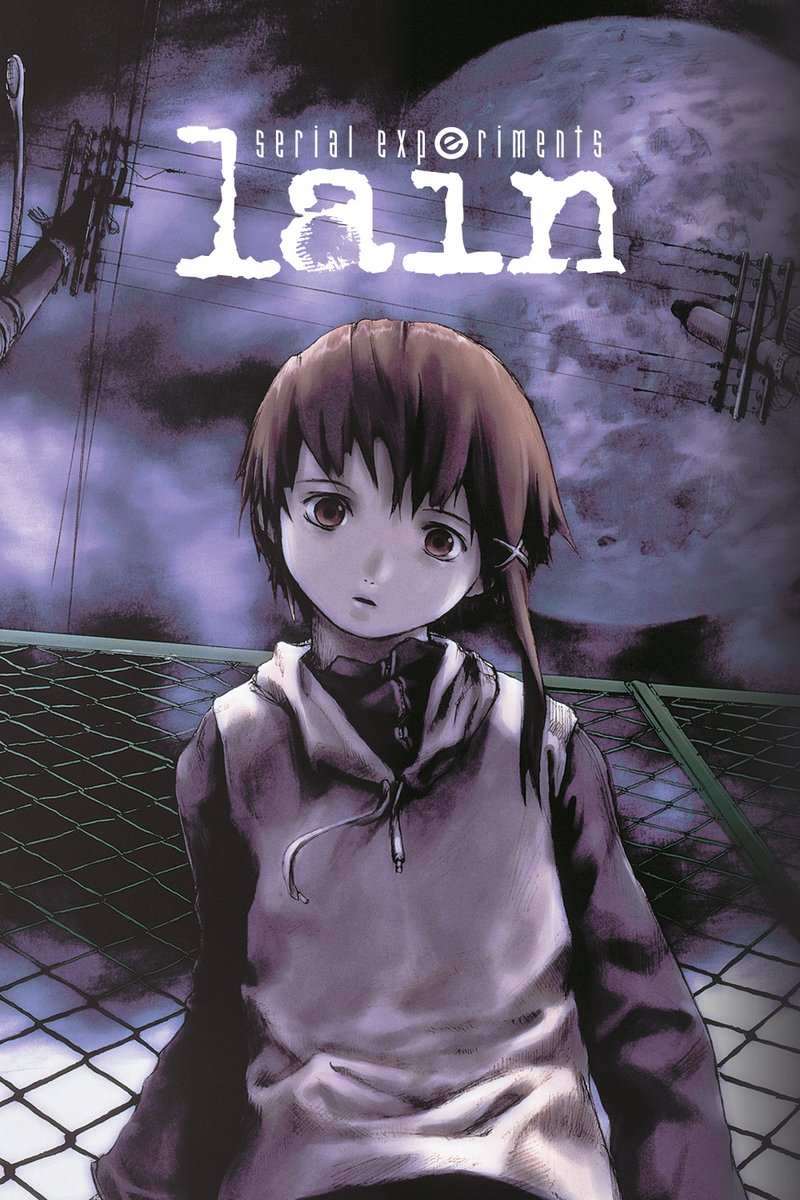
There are rare moments when you start browsing through anime as a newbie, trying to familiarize yourself with the medium. You look at one in particular that catches your eye almost immediately. From looking at its description and everything else around it, you know it will either be your favorite anime or not. Serial Experiments Lain was that for me, and to say it kept me invigorated from beginning to end would be an understatement.
The year is 2011, and I was starting my life in college. I was already knee-deep in my anime fandom and keeping track of almost every anime that came out each season. Not only that, but I was also into philosophy from any era or field, as well as science fiction literature. Out of all of the sub-genres of science fiction that allured me the most, Cyberpunk was the one that stood out from the rest. I read most things William Gibson, Neal Stephenson, Bruce Sterling, etc., around this time of my literary phase. So when I saw that there was an anime called Serial Experiments Lain that merged these two things, it was an instant watch for me once I read the description. I would call Lain a Postmodern, Cyberpunk, and psychological turducken are what I would call it.
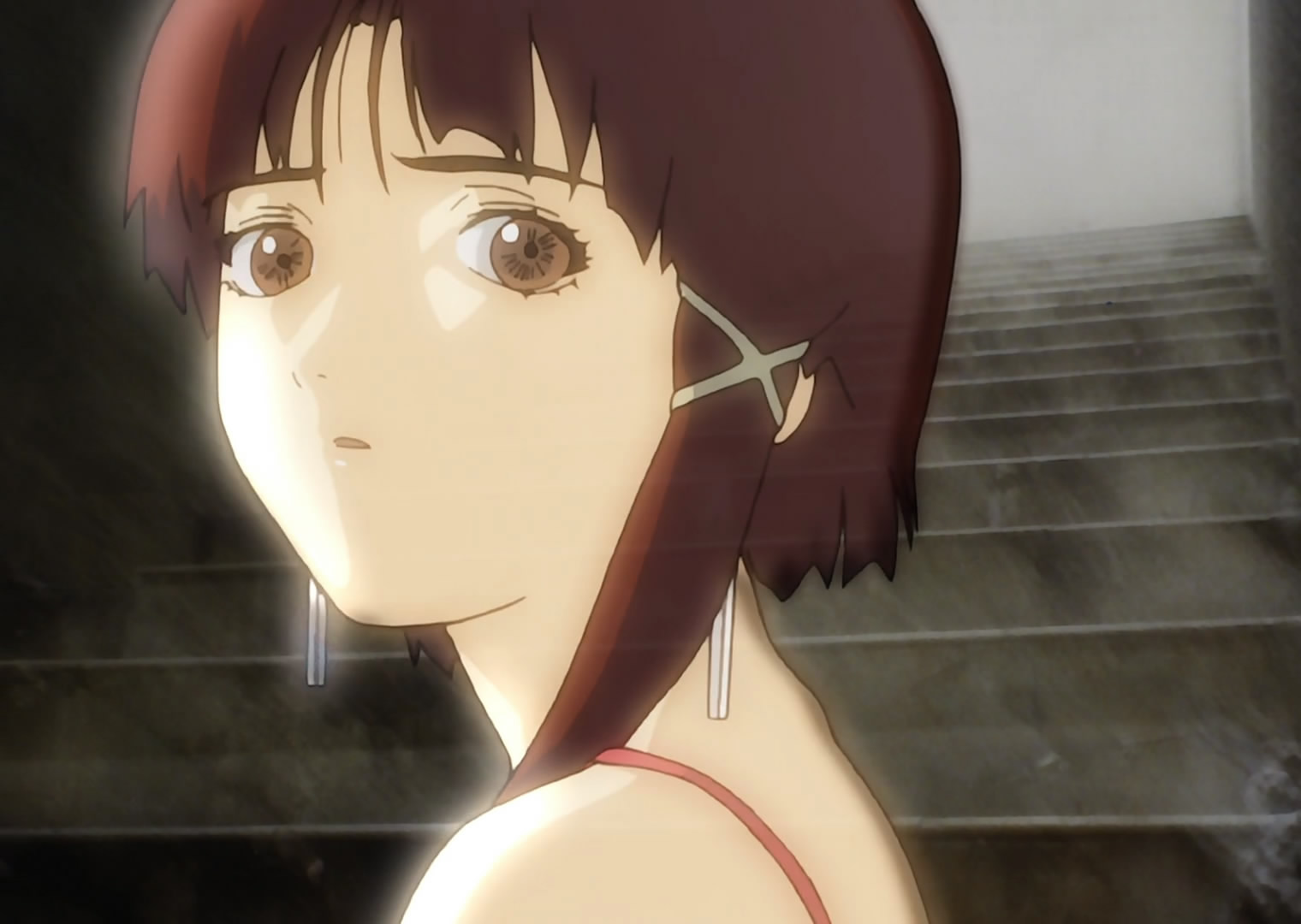
Lain blends all of these things perfectly. Using the atmosphere to create a level of paranoia for the viewer to experience could be compared to reading a Philip K. Dick novel or a thriller film by Polanski. The experimental nature might be a turn-off to many who go into this blind. Some may say that it only tries to be this way to mask any plot inconsistencies and so forth. But I don’t think that’s the true purpose of why Lain tells its story in a seemingly disorganized and messy way. The atmosphere it is trying to convey fits accordingly to the avant-garde narrative style. It doesn’t feel contrived or unnecessary. It creates an unsettling mood that fascinates us with what is going on by giving us minimal exposition. With Lain, it makes sense not to because if the writers tried to provide us with too much context on what is going on, it would lose that sense of paranoia and psychological horror. So, the lack of exposition is a positive exception to this narrative rule.
Another thing that gives Lain its unique atmosphere and tone, besides the narrative structure, is its art direction. What’s strange about it is that it is incredibly exceptional yet dated simultaneously. It still has that stiff TV animation you typically see from late 90s anime. The character designs don’t have much pop or character as other anime did during this period. Yet, all of this works despite themselves. Yoshitoshi Abe, who has done original character designs for Haibane Renmei, Texhnolyze, and others, is always a visual treat to see his characters blossom in animation. While I think his original creations have transferred better in other anime, the design of Lain herself is incredible and has stood the test of time.

Outside of character designs, everything else around them, art-wise, is the true visual treat of Lain. Every background gives us a visual metaphor, like the red dots on the shadows in certain scenes to represent the Wired. The retro 90s aesthetic of the computers gives off a wave of nostalgia that encapsulates the rise of the internet and the computation of its time. Sure, it does come off as dated almost 25 years later, but like how music genres like vaporwave and all of its sub-genres are celebrations of nostalgia, watching Lain invokes that same celebration from repeated viewings years later. The visual representations of the Wired itself are about as surreal as one could expect from an anime like Lain. They all feel concise and purposeful in what they try to represent in their symbolism despite how avant-garde they look.
It’s not often I get to praise the sound design of an anime, as many of them don’t have what I would call unique sound effects or off-kilter sound design. But Lain is one of those rare exceptions where you will remember various sounds sprinkled in each episode. We all know the famous white noise generated in the outside scenes whenever we look at telephones that create the sound of “the Wired” that Lain always hears. It gives the anime an ominous aura that helps reinforce the mysterious atmosphere that it is trying to convey to the audience. As for voice acting, for what little there is since it heavily relies on narration and not much dialogue between characters, it does its job very well, especially the woman who plays Lain.
Serial Experiments Lain’s story is what I always love about Sci-fi, Psychological, and Philosophy done right. Everyone loves to deconstruct the plot of Serial Experiments Lain in what everything symbolizes and what the true nature of the character Lain is. I won’t go into that whole spiel, as it has been done to death in various blogs and youtube video essays. I will explain how the story, particularly the character Lain, impacted me as I watched it firsthand. My feelings for Lain are more on a personal level than anything else. I promise I won’t go on an autobiographical tangent.
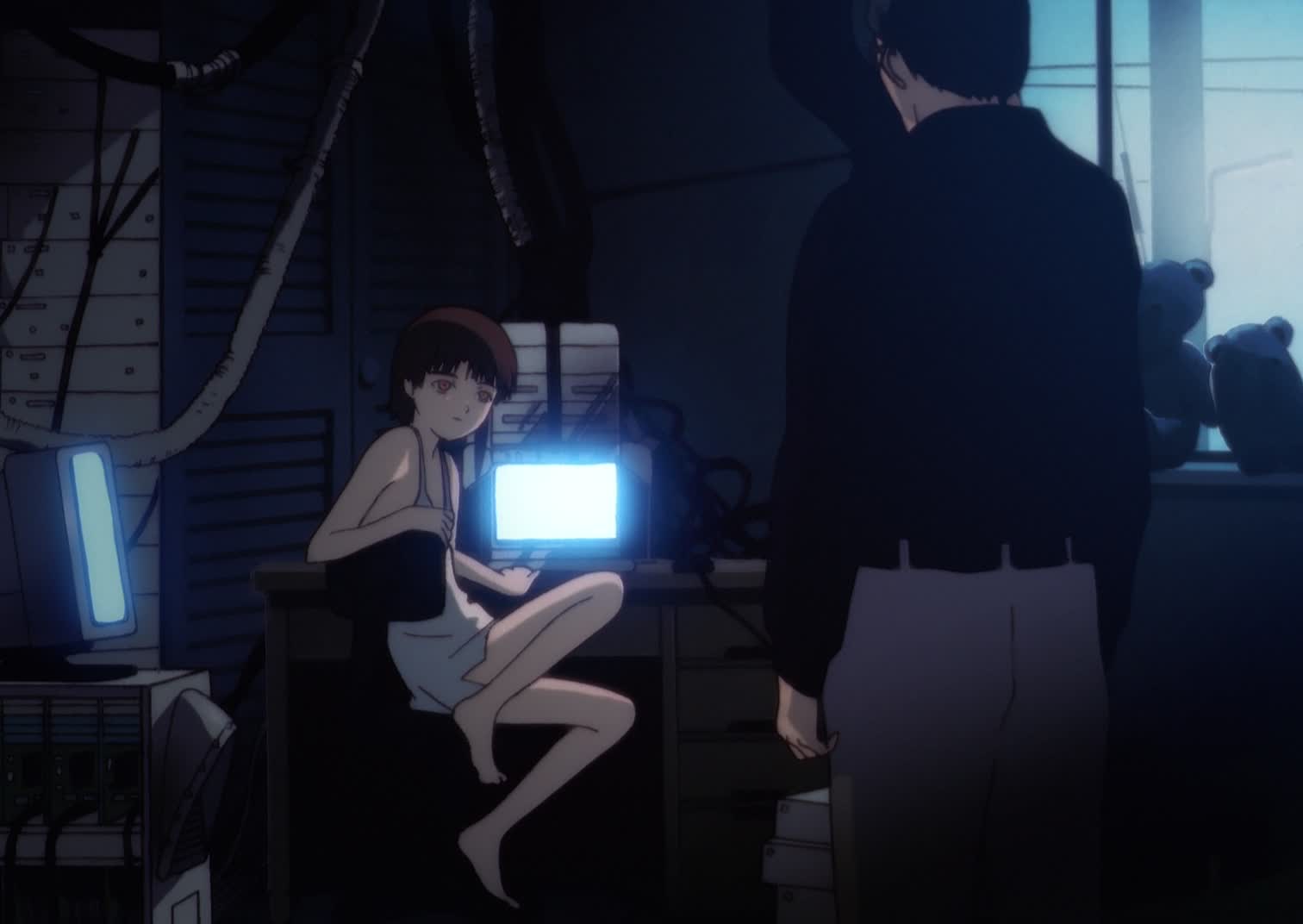
Lain, as a character, is the closest character in anime or any other medium that represents how I was around her age. Having very few friends, going on my computer for untold hours at a time, and trying to discover what I am as a being in this world. Now, the whole God part is out of the question as even at that time, I was/am an atheist and the implied paranoid schizophrenia. But the story of Lain trying to find her self-worth and identity through Wired resonated with me as a young college kid and invoked this wave of euphoric nostalgia as this was released around the same time I started scouring through the internet. I was a strange kid like Lain, thinking of myself as enlightened than everyone else, as egotistical kids tend to be. I can’t say that anyone else will have the same experience, but this is to explain how this will forever remain special in my anime-watching career.
Outside of my own experiences, the plot of Serial Experiments Lain still has much to offer despite its minimal presentation. You’ll most likely be scratching your head at the lack of exposition it gives. I look at it in that it’s more about the journey than the destination. It doesn’t matter what the climax will be as long as you are invigorated by the artistic merit Lain gives and the psychological issues our heroine goes through. You’re more or less witnessing Lain stumbling through bouts of schizophrenic paranoia. That’s the most you’re going get out of the plot. To me, that’s all you need to know. It’s less of what is happening outside of Lain and her friends and more of watching the gradual shift of personality we see with them. The way it is directed with little explanation is a positive in Lain’s case, as I’ve mentioned before about its atmosphere being mysterious and out-there. It would lose all those aspects if it were bogged down with exposition. While it might frustrate many, the ones that do not get frustrated will be rewarded.
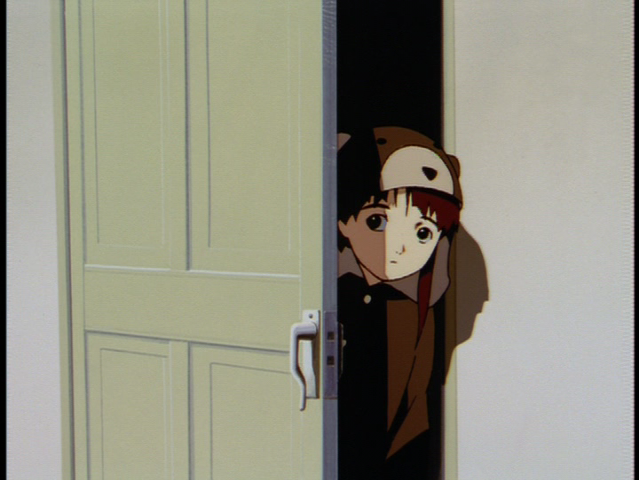
I might as well talk about the OP, as it is one of my favorites of any anime. While many might critique it as being a little too pop-y for the type of anime it is, I think the way it complements the visuals of the OP and how well-played the instrumentation is. I will say the ED is not a fan of it at all. It isn’t as pleasant to listen to and feels more out of place as it sounds like something you’d hear from an action seinen anime.
This anime is a difficult one to review and recommend to anyone. Lain is something that rewards your patience. If you can’t have the patience to decipher what is going on, you’re probably not going to in the future unless it suddenly clicks. When you’re someone like me who gravitates to stories and themes that Serial Experiments Lain tries to tackle, this is a no-brainer as my favorite anime. I can’t guarantee that even someone like me would have the same sentiment, but it’s safe to say it was an unforgettable experience almost ten years ago.
Let’s all love Lain.
Grade: A+
 Gonzy's Anime Love Shack