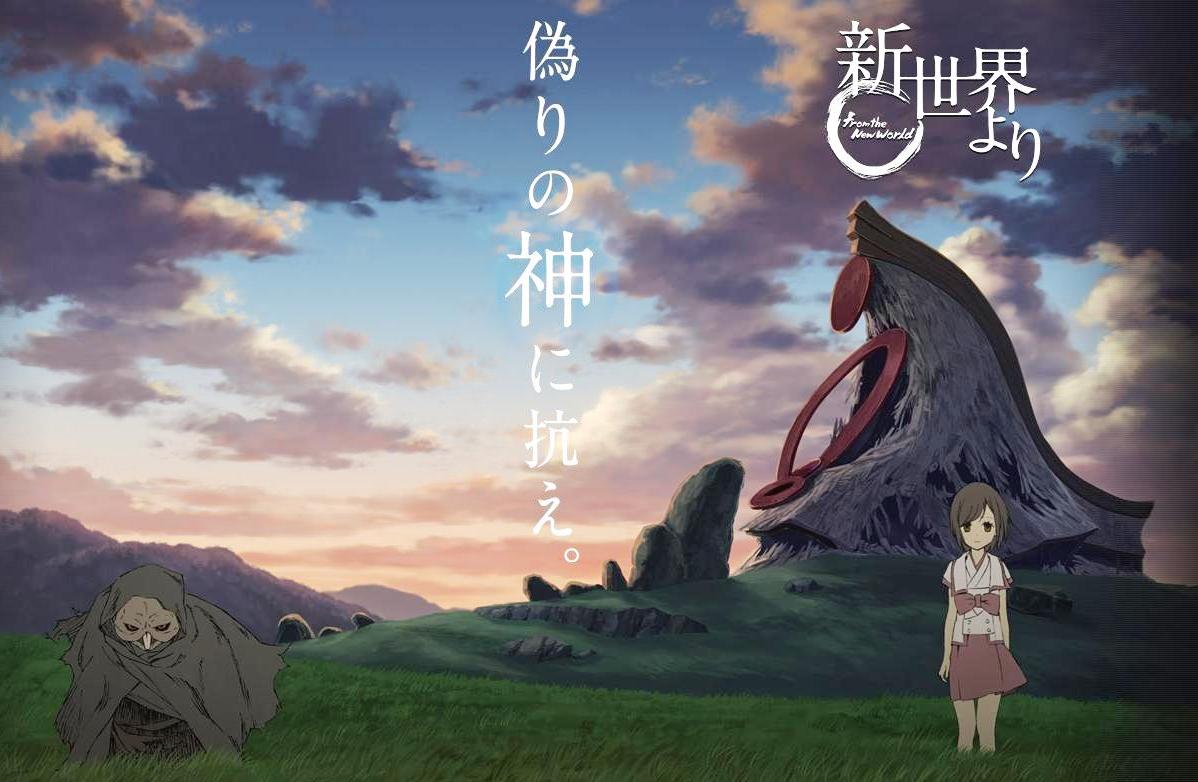
There’s often a point in one’s life to acknowledge the possibility of another worldly phenomenon outside of our collective conscience from where we live that is in contrast with our ideals. This philosophical problem has always been a subject of discussion since Plato’s “Allegory of the Cave,” which chronicles how our limited understanding of the reality we perceive may not be what it seems since we’re so entrenched in our society. Many works of fiction have dabbled this subject matter numerous times, with some succeeding and others failing. Unfortunately for Shinsekai Yori, it falls into the latter, but not entirely.
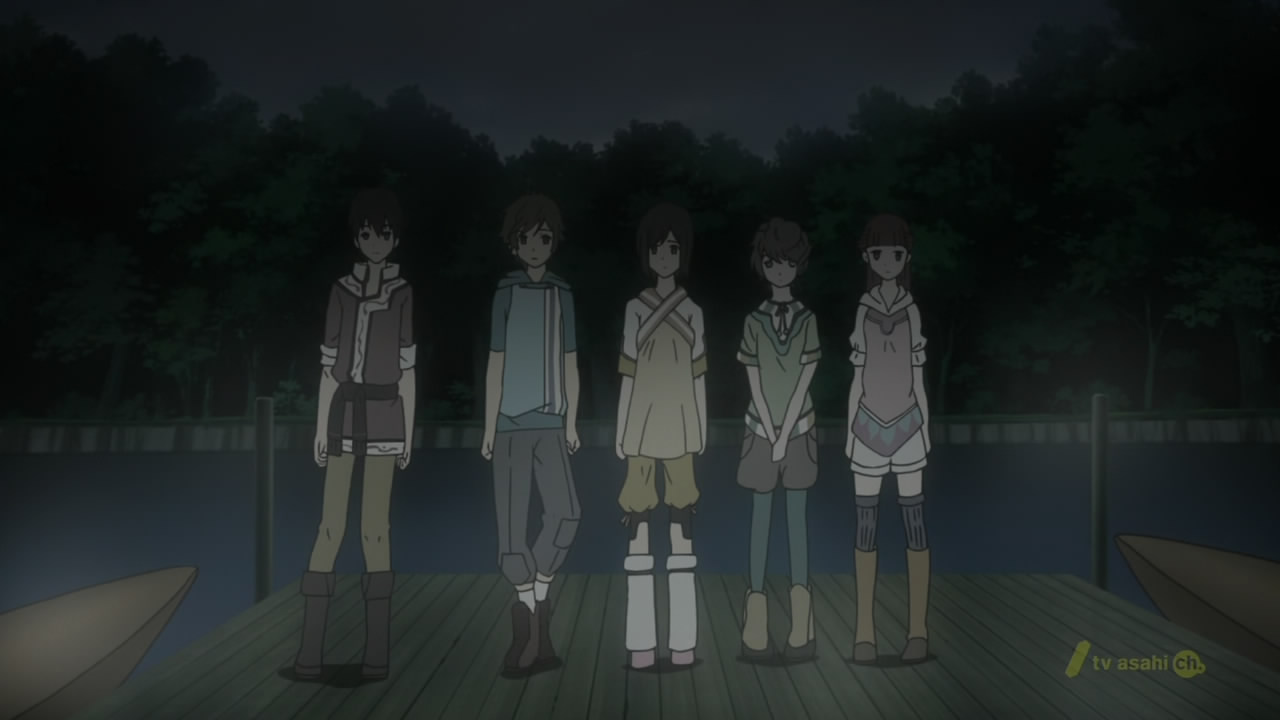
To start, the basic idea of how Shinsekai Yori’s story pans out is that it’s a coming-of-age story focusing on five different characters. Their journey in discovering the history of human civilization eventually transpired into pure dystopia. It starts exceptionally well with building up these characters that are all very unique and distinguishable from each other. There’s never a moment where I couldn’t remember who a specific person was, and it’s not just their appearances but their well-written personalities and backgrounds. Their childhood arc paces itself nicely in giving an atmosphere for us to take in that’s mysterious and puzzling in a minimal understanding of what the world is actually like because that’s how the childish mindset would be like in this scenario. However, once that arc was finished and we got our first-time skip, it didn’t get too extraordinary as one would hope.
One thing that makes the time skips off-putting is how there’s hardly any build-up on how these characters’ personalities matured over time. For instance, one of the most controversial things about the show was the relationship between kids of the same sex. It’s not so much the relationships themselves that I have a problem with. It’s how it comes out of nowhere with hardly any development behind it. In this sense, it feels as though there was more to their relationships, but they had to rush it so it won’t feel dragged out for time constraints. Because of this, one might feel inclined to give it a pass. But for me, the time skips cannot forgive. Given the context, this show brings to the table wanting to be this grand epic that ultimately feels lazy from a writing perspective. The best romantic development in the entire show was between Saki and Satoru because of how long we’ve followed these two together and how strong their bond was in helping each other through the numerous challenging obstacles. Alas, the rest of the relationships thrown out didn’t make a massive impression because of how weak and lazy they implemented them into the story; if they had anything of value for us to see how they got to that point, it would’ve been for the best.
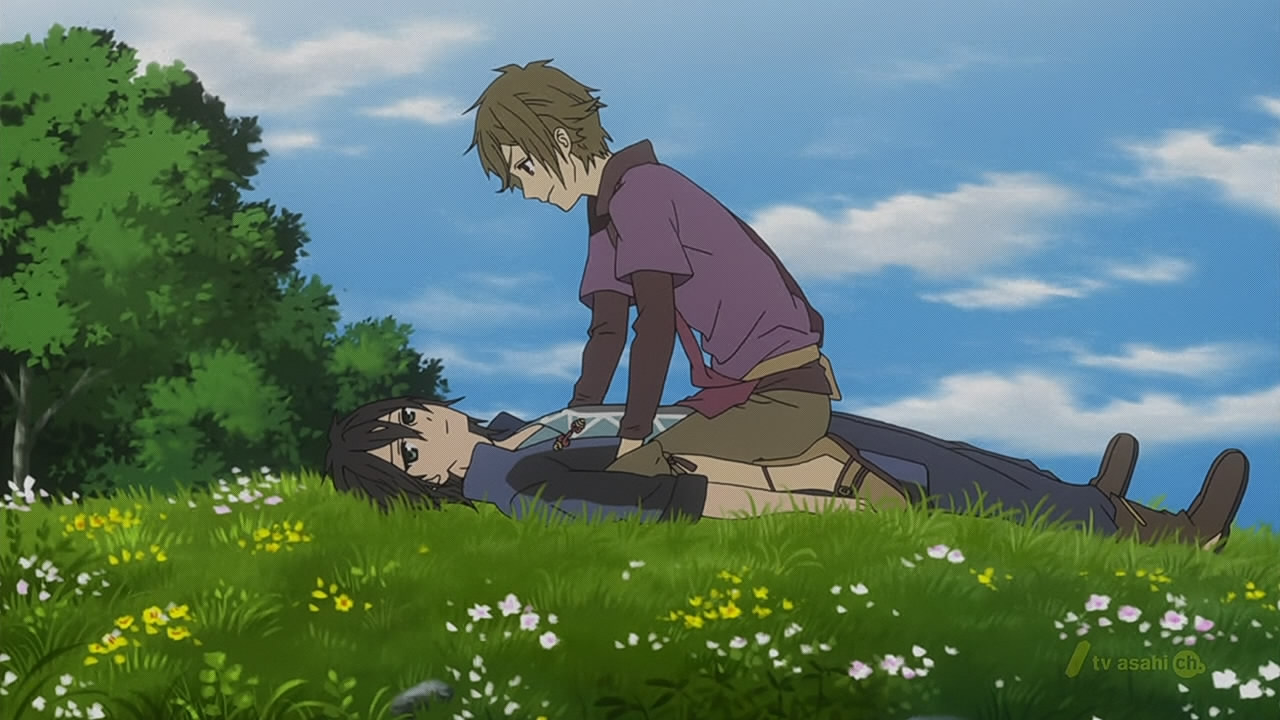
While the story itself isn’t something we’ve seen before, it is still a mysterious and suspenseful drama that manages to pull off some great twists through the narrative. That is until the realization comes to mind when the pacing of it all fails to make it a masterpiece in the writing department. Like I said before about the time skips, they dumb down the pacing because of how they rush some of the arcs that could’ve been more effective had it been done with better intentions, such as at least showing us a montage of them overtime. That shouldn’t mean that time skips are unnecessary in any situation, but it takes a lot of care and precise handling to make them work. Time skips aside. The other pacing issues mostly happen in the middle part of the show, where scenes lack clarity in their exposition, giving us a clear, concise way of what has happened or what will happen to the characters or future events. Too fast to even comprehend the overarching conflicts that arise from the protagonist feeling messy and disorganized for us to piece together what will transpire. This could come into play with the fact that the show skips over essential details in the novel, but for reviewing the show itself, there’s no need to go over that aspect.
How Shinsekai Yori handles its world-building through expository dialogue receives a mixed response from me. It works like a pattern where one or all of our heroes are journeying or trying to find answers. Eventually, they’ll talk to someone who will explain everything to them in no more than ten minutes, either the dark history of Japan and how it ultimately became a grim dystopia or what the ethics counsel is really like underneath. The narrative is thought-provoking at times that bring into question human nature and how society structures itself into chaos. However, I can’t help but feel that it could’ve been done more better with less redundancy and not feel like a lazy attempt at being profound.
It’s not just the writing that feels off, but the technical side of the show feels very limited and looks shoddy in the process. That’s not to say all of it looks bad, there are a lot of beautiful set pieces drawn into the backgrounds, and the character designs look unique and fit well with the tone of the show. However, there are a lot of problems with the designs of the monsters that inhabit Shinsekai Yori, where they don’t look well-drawn, and their animations look as if the director hired a low-budget studio to animate them. There’s even one episode where the animation took a complete nose-dive where the queen of the queerats looks like a giant blob that the animators didn’t draw fully of what it was initially supposed to look like. I’m not saying that all shows have to look highly high-budget to be called good art/animation, but it doesn’t strike my fancy when there’s nothing significant to gaze at.
With all of the negativity I’ve had for Shinsekai Yori, there are still several good things worth noting. It is without question that the amount of suspense and heart-pounding tension that Shinsekai Yori offers is astonishing. The first three minutes of the first episode alone garners some needed praise for its well-directed atmosphere, right down to the music and editing of all of the events in present-day Tokyo. Its tone is not pretty, and it will nonetheless make a lot of people feel uncomfortable to sit through in some instances, but that should warrant a lot of credit to the show in giving us a very mature tone that comes in full swing. What makes the suspense amazingly good and imposing is the amount of mystery that we are provided through the children’s perspective and how we can never see how the adults know the situation in the world. Often you don’t see stories handle mystery this way and make for an intense experience. The first-person narrative through Saki gives a distinct feel to how we see her grow into this person who is fully aware in later life that feels undeniably human to me.
As many have told me about the story, the ending makes up for it despite its faults. It provides the level with a satisfying conclusion. There were no predictable outcomes present at the narrative’s end. That guarantees Shinsekai Yori some much-needed acclaim for at least not giving us a story that isn’t inherently generic in a predictable way. No Hollywood gimmick severely tarnishes the gritty tone. It handles itself in a very realistic fashion that feels very satisfying to see first-hand.
Musically, it mainly consists of really bombastic chanting music that is very haunting and intimidating from the style of tone it tries to set. There are very few questionable choices of songs that Shinsekai Yori has that feel out of place in any scene. Intense orchestration also borrows from some minimalist influence in some ambiance tone it gives with light electronically ambient mixes in-between settings that are inherently quiet and simple.
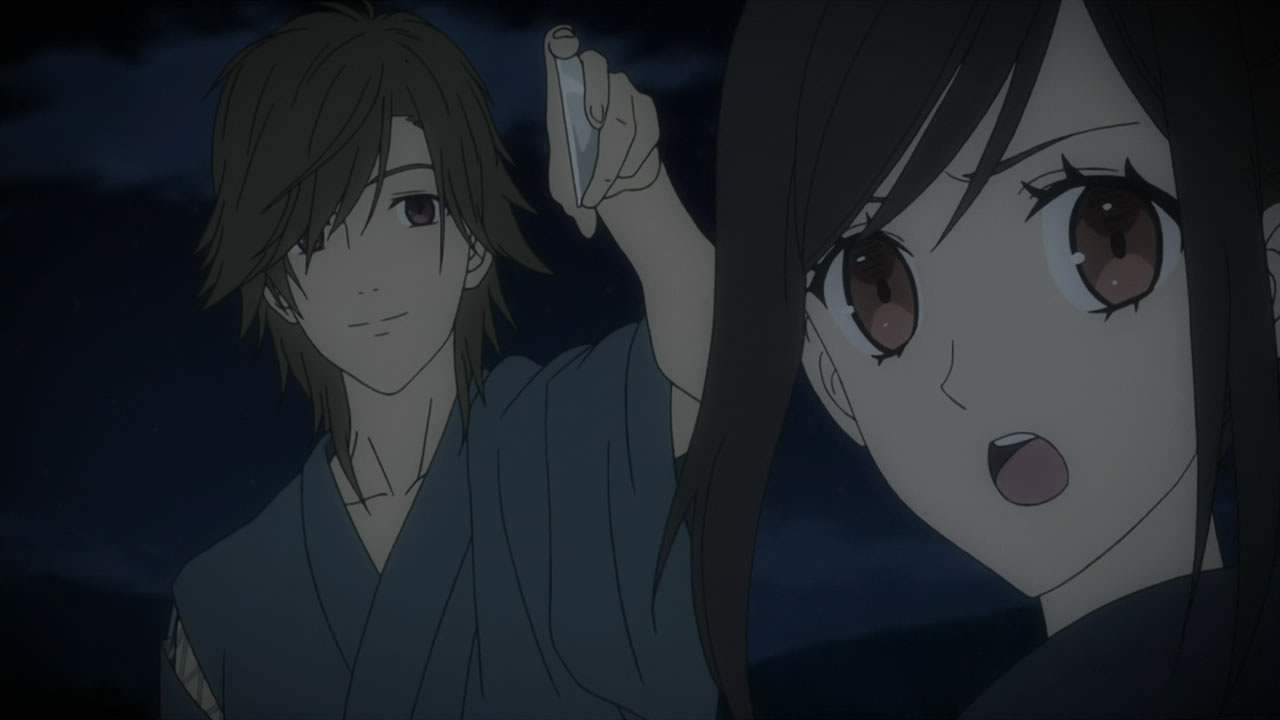
Ambitious though it may be, Shinsekai Yori just doesn’t cut it entirely as a supreme masterpiece that has come out in recent years. The problems it possesses in giving us a poorly-paced story that can’t provide a concise narrative that’s hard to get around. Character development feels good in some areas, but their relationships felt contrived with inconsistent expository problems due to the poorly put time skips. I wouldn’t classify this show as completely bad. The amount of suspenseful tension makes for an intense experience to behold in showing us the one significant development of Saki into a fully realized character. After all, a worthwhile experience with many faults in its technical aspects is at least more tolerable than a show with great technical prowess with no added value to the experience whatsoever.
Grade: B-
 Gonzy's Anime Love Shack
I know I’m arriving late, but I felt I’d add a few things!
Time skips I totally agree. I think it is the problem of doing a novel, especially a science fiction novel. And Shinsekai Yori is no tiny book. That leaves several details out that, while they aren’t IN the show, can still be seen between the lines.
For example: The romances. The teen romances are probably meant to be commentary on the society. They happen because we got that whole “Humans be Bonobos!” thing in the first arc, but when you put the pieces together, you realize the Kamisu society has a very good reason to not want people under 17 having heterosexual partners and accidentally conceiving a child (and thus having responsibilities, the same reason they make their entire lives about school and nothing else, avoiding the big spoiler here). In this sense I think they are used as set pieces, one more “evil” of this in-human society, rather than focuses on character study. And really, what I got from watching it, what was most important was seeing how important Maria was to Saki. A few moments of affection between the two to buy that it’s a relationship, but the ripples on Saki’s personality are very present, like the scene in the igloo, or my personal favorite, “May you see beauty”. I think that’s why they let us in that Maria’s life should have “ended sooner” in the very beginning, as she mostly existed as a plot force, or a way to define Saki’s character. I’m not establishing this as good or bad, just that, it’s a common thing in adaptations, and, much like the lord of the rings was compressed to be Frodo-centric, I think Shinsekai Yori the TV show is Saki-centric for the same reasons.
It’s all part of the problem of “scope”, Shinsekai Yori demands you think about its implications too much (which is definitely a flaw if it can’t come across easily). Like the Bakenezumi queens…who Saki speculates use a form of juryoku abilities…and then you remember that children with weak powers are culled…and that Squealer’s lobotomies on the queens are probably the ultimate fate of Mamoru and Maria…Nyugh…
Not a rebuttal or anything, definitely agree on your final score (well, maybe by half a grade ^_~).
Thank you for reading and I loved you comment! It definitely does come across as, what you said, a “Saki-centric” story where we don’t get the full scope of the world and it feels limited of what it wants to tell us in its themes.