
Deadly monsters, haunting spirits, and supernatural entities beyond humans to even describe with words are a few examples of what makes horror an appealing genre to many. There are great examples of works of horror that can be considered real masterpieces of their kind. However, it is undoubtedly one of the most accessible genres to not succeed in garnering pure terror within its framework, especially with anime. There are only a handful of noteworthy horror shows, and the rest only come up with predictable scares and horror tropes being used way too much. Unfortunately, Mononoke fits the latter, but only by a very slim margin.
To expand on that last point, Mononoke is not what you would call a terrifying show to watch. It would be more accurate to describe it as “startling.” It doesn’t try to disturb you with its overly-bombastic imagery; instead, it wants you to seek out the subtle artistic prowess that it has to show before it starts to suck you into the horror by surprise. The execution of all of it feels very fitting and nicely spaced out so that they feel less tedious and uneventful to go through. Many horror anime think that if it throws in any ominous or thunderous music, blood-splattering gore or your usual horror cliche left and right, they can call their show a real horror show. In reality, they make it the opposite of their intention because you’re already used to it after the twentieth time it has happened halfway through.
Mononoke proves that you don’t have to use any of those aspects in horror to define yourself as one. The one thing that almost everyone can agree with is that the natural source of horror is the “unknown.” The fact that you can’t see something yet feel a presence within your surroundings can be one of the most genuinely terrifying things to experience in real life or film. Elements of this nature were put into full effect when H.P. Lovecraft first based his stories around this concept. Mononoke does the same inflections of some of the stories Lovecraft put into his short stories and does them to brilliant effect. The only noticeable difference is that Mononoke shows supernatural entities, whereas Lovecraft never did.
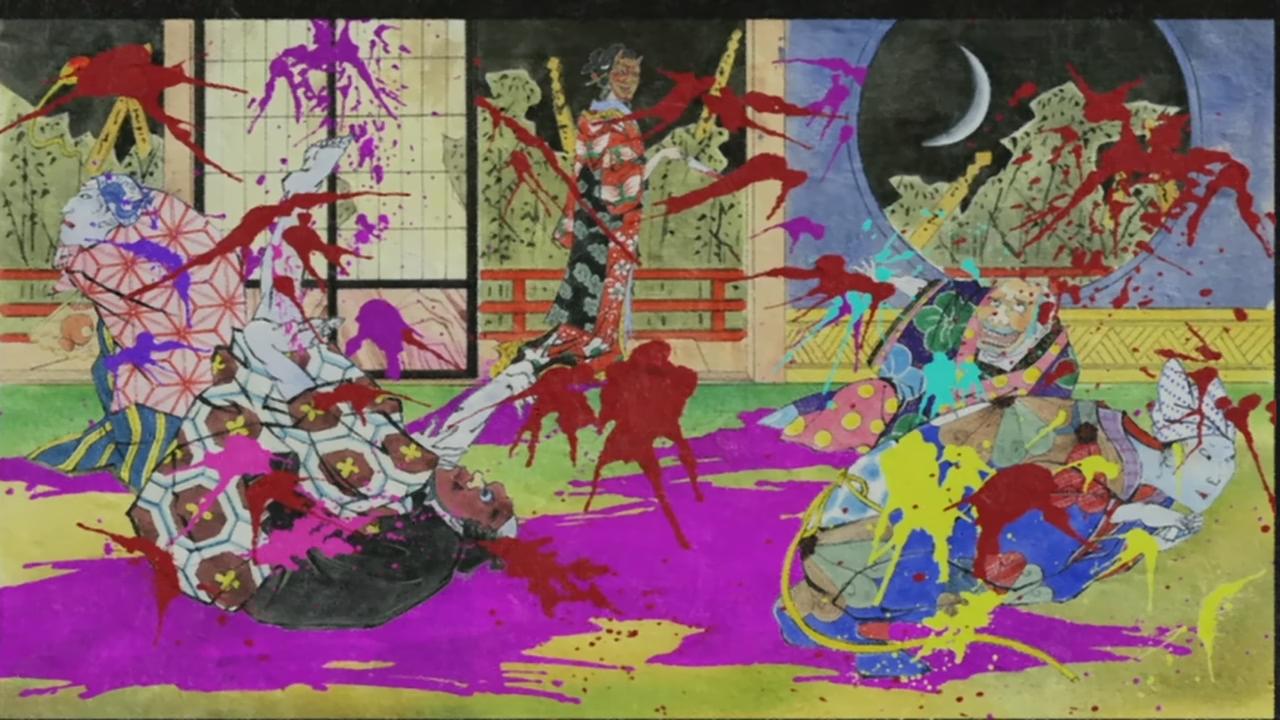
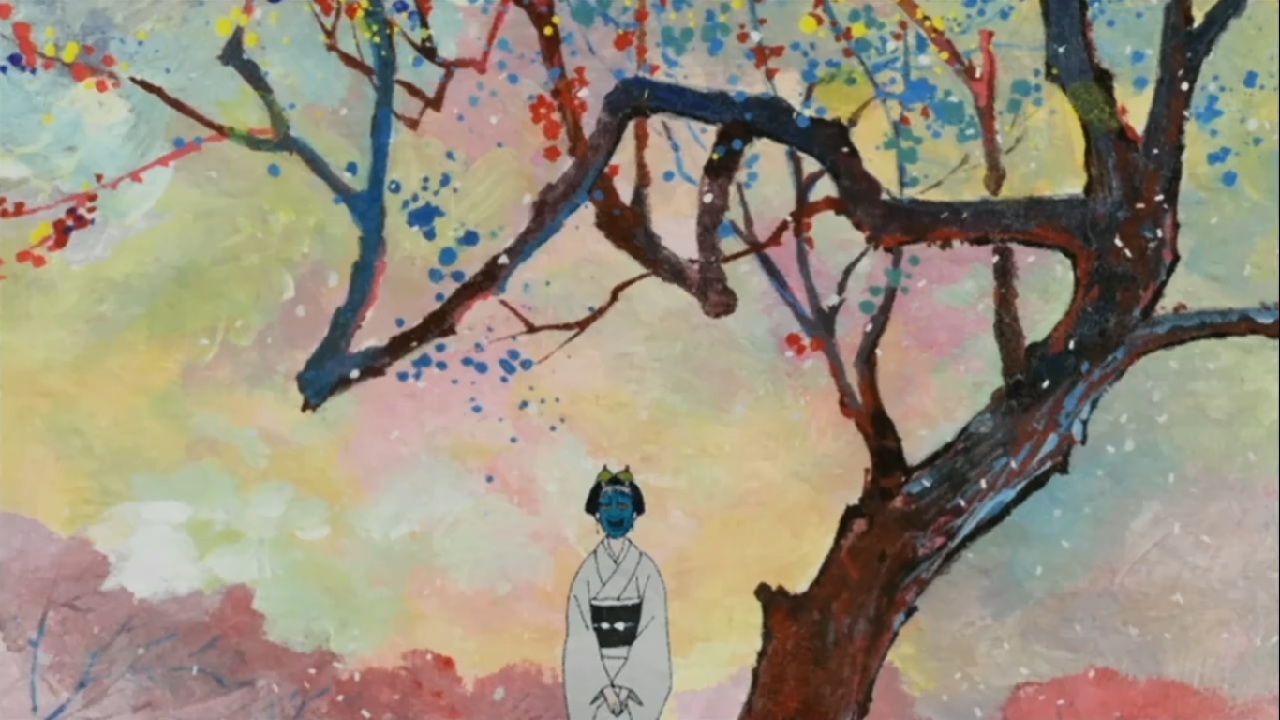
The apparent inclination shows that this is a separate story based on the character, “Medicine Man,” from Ayakashi – Samurai Horror Tales. Before I discuss how the show structures its plot in each arc, the one fundamental notion that makes Mononoke a truly unique experience is how much creative detail it gives to the setting of historical Japan. Along with House of Five Leaves, this is one of the closest that anime has gotten, in recent memory, genuinely capturing the pure essence and atmosphere of what Japan was like during its later modern period. Obviously, without the supernatural elements, the artwork on display feels like an ancient painting done by past painters from Japan that strengthens the atmosphere and its impact on the creativity put into the horror. The artwork and the little tidbits they put into the show, including various Japanese folklore that they tell us at the end, are very inspiring and fascinating to experience.
Onto the plot arcs themselves, unfortunately, they are not the very highest point in compelling storytelling. With about five different stories put into one show, only two of them stick in my mind as entirely memorable or thought-provoking. The one that can be considered excellent is the first one because of how it introduces us to Mononoke’s world and its concepts of the Mononoke and is an ideal introduction to the show. The second arc consists of a very gripping story about each’s goals of getting out of the mess they have been brought to, and each of them has this detailed back story that makes them not just this throwaway character that our main protagonist steals the show from. Unfortunately, the rest suffer through what I would call overused tropes from the previous two episodes. Of the three last arcs, two of them both involve a group of people that Kusuriuri, our main protagonist, tries to investigate concerning the disturbance of Mononoke. It is almost as if the writer could not think of a new kind of formula he could put into his stories. Hence, he decides to reuse similar tropes to his previous novels and put a completely different spin on that original idea. It doesn’t matter if the plot is entirely different from the previous one. It still follows the same formula and feels repetitive and almost predictable.
I wouldn’t go so far as to say they are “terrible” to go by, not at all; it just feels mediocre compared to the previous ones. What makes the plot worthwhile to experience, for better or worse, is Kusuriuri, or the “Medicine Man,” as he’s typically called. Similar to how great Ginko is in Mushishi, Kusuriuri has this aura around him that makes him very attention-grabbing. The only difference is that you don’t know much about Kusuriuri’s personal life, but only what he does in his job. His intelligent, fast-moving mind makes him a competent protagonist to root for only by how calculated he lays out his plans in getting the Mononoke and helping the people that need his help the most. It is one of the rare instances where the lack of personal development of one character doesn’t hold back their quality and just from how much he views the world from his own eyes and gives us his take on the mysteries involved in the plot. The unknown archetype adds to his depth and characterization more than almost every character in Mononoke, who also have well-developed characterization.
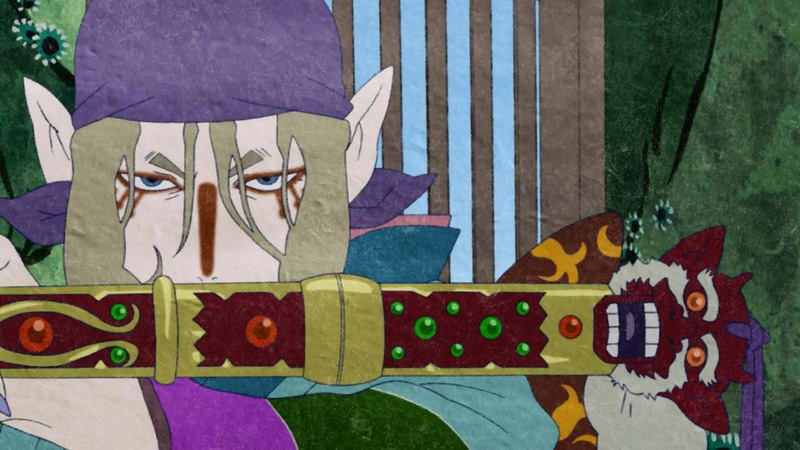
Whether you want to call the animation, provided by the most lauded Toei Animation, “experimental” or “classic art,” it nevertheless feels very dynamic. Toei wants to stick to its roots when concentrating on its animation skills, and this is one of its best. The fluid motions of how the characters move, react and illuminate feel very human-like and provide a significant degree of hard work into each animation frame. What is even more fascinating is how the animators put a lot of creativity into the actual Mononoke, which is influenced by Japanese folklore. Even though you don’t see them for more than five seconds, those five seconds will be burnt into your memory for years to come.
Mononoke is a different breed of horror that many anime have not attempted to replicate even in the past. There hasn’t been a horror film or show that never makes you scream out in terror, yet in your mind, you feel almost as if you had gone through a night terror that you don’t remember screaming, in sheer anguish and fear. While the show never really compiles an essential detail of a groundbreaking story, it indeed is a sight to behold in grasping what can be done with a gorgeous setting with beautiful sets of animation to go with it. Let it be said; that when it comes to creating great horror, there should never be boundaries that restrict what it wants to show in terms of pure terror. Otherwise, it would not be horror, one way or the other.
Grade: A-
 Gonzy's Anime Love Shack
Reblogged this on Just my guilty pleasure reblog. and commented:
Great review!
Thank you. :)